Water Damage Restoration in Dallas, TX
Water damage needs a safe assessment of the source, affected materials, and possible contamination. Dallas Flood Pros provides information and collects interest only; it does not dispatch crews or have restoration contractors lined up. If there is immediate danger, leave the area and contact emergency services or the appropriate utility rather than waiting for a website response.
Interest only. This form does not request emergency help or book service. No contractor match, callback time, appointment, quote, or provider availability is promised.
Assess the Actual Dallas Water Loss
Distinguish water from an active plumbing leak, roof intrusion, surface flooding, or a drain backup. The source and actual property conditions guide the next steps; a city name, neighborhood, or weather pattern cannot establish contamination, flood-zone status, or restoration scope. Do not enter standing water near electricity, unstable ceilings, or damaged structures. Contact a qualified source-repair professional and an independent restoration provider directly.
Water damage restoration usually covers several separate jobs: stopping or isolating the source, removing standing water, deciding which wet materials can be dried and which need to come out, drying and measuring what stays, and then rebuilding. In Dallas, TX the common sources are familiar: supply-line and water heater failures, attic HVAC condensate lines and pans that overflow onto ceilings, slab leaks under concrete foundations, roof leaks after hail or wind, frozen pipes during hard freezes like February 2021, and street or creek flooding during heavy spring storms.
Restorers commonly describe water by category. Clean water from a supply line is treated differently from gray water, such as a washing machine overflow, and from black water, such as sewage or outside floodwater. The category, how long materials stayed wet, and what they are made of all shape the plan. For how standing water is removed and what to ask about carpet, pad and moisture readings, see the Dallas water extraction guide.
Water Damage Recovery Topics
The linked topics explain separate parts of recovery. Ask a chosen provider which phases are included and who is responsible for source repair, mitigation, contents, and reconstruction.
Emergency Water Extraction
Extraction removes accessible standing water. It does not prove that walls, floor layers, insulation, or other assemblies are dry or that contamination has been addressed.
Learn More →Structural Drying
Drying needs material-specific goals, documented measurements, and reassessment. A surface that feels dry is not evidence that concealed materials are ready to cover.
Learn More →Mold Remediation
Visible growth, persistent musty odor, or a history of wet materials warrants appropriate assessment. Avoid disturbing suspect growth or using fans to spread air from contaminated areas.
Learn More →Sewage Cleanup
Treat sewage or unknown floodwater as potentially hazardous. Keep people and pets away and contact qualified cleanup and source-repair professionals; ordinary household cleaning is not a substitute for assessment.
Learn More →Contents Restoration
Contents decisions depend on material, contamination, condition, and significance. Do not power wet electronics; arrange appropriate assessment and keep an inventory of affected belongings when safe.
Learn More →Insurance Claims Assistance
Keep photographs, the event timeline, invoices, and provider records. Your insurer must answer coverage questions; this website does not represent you or bill a carrier.
Learn More →How Water Damage Restoration in Dallas Usually Unfolds
Every loss is different, but most written restoration scopes follow a similar order. Knowing the order makes it easier to see what a proposal includes and what it leaves out.
- Safety and source. Shut off water at the main or the fixture if it is safe to do so, and keep away from wet outlets, sagging ceilings and floodwater. A plumber, roofer or utility may be needed before restoration can start.
- Documentation. When it is safe, photograph the affected rooms, the source and damaged belongings before anything is moved. Insurers often ask for this.
- Water removal. Standing water is extracted from floors and carpet. Removing visible water does not mean walls, cabinets, subfloor or insulation are dry.
- Material decisions. Saturated drywall, insulation, carpet pad or cabinet toe kicks may be cut out so hidden cavities can dry. Ask why each item is removed, and ask about asbestos or lead testing in older homes before demolition.
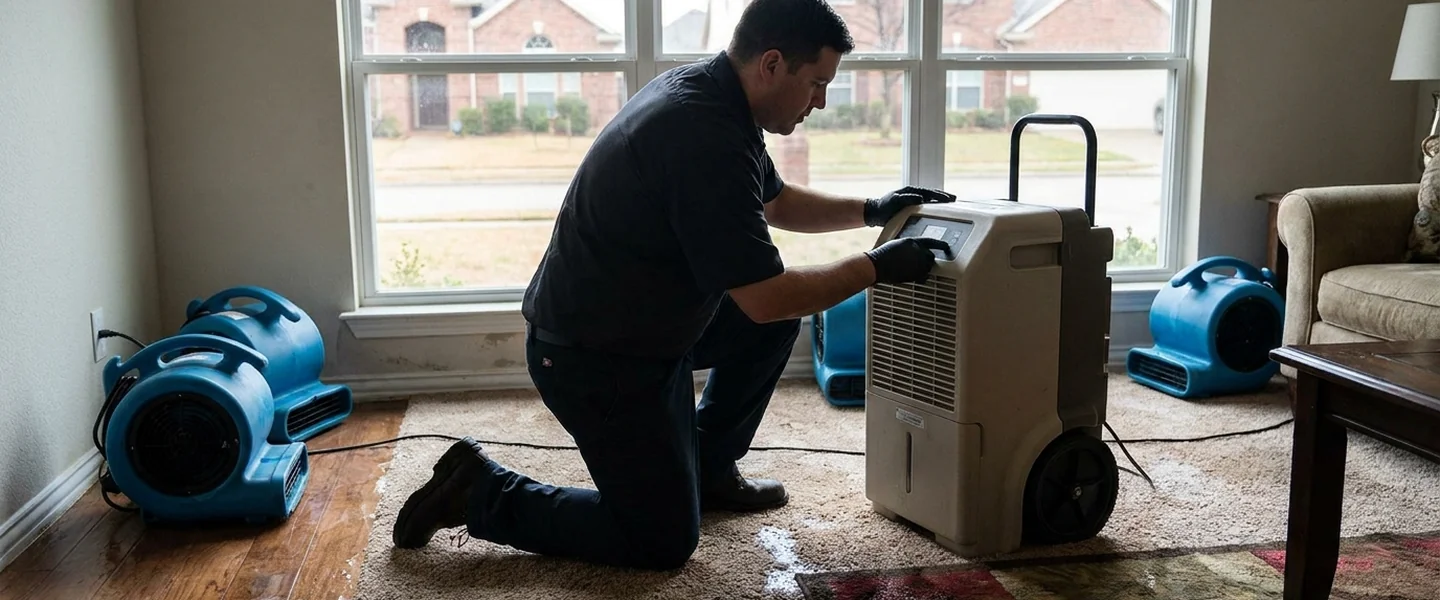
- Drying and monitoring. Air movers and dehumidifiers run while moisture readings are taken in the same spots over several days. Ask for those readings in writing.
- Repairs. Rebuilding drywall, flooring and paint is often a separate scope, sometimes with a separate contractor.
What Changes the Cost of Water Damage Restoration in Dallas, TX?
This site does not publish prices. These questions explain why two written scopes for the same loss can differ widely:
What category of water is it?
Clean supply-line water usually allows more materials to be dried in place. Sewage or outdoor floodwater usually means more removal, protective handling and disposal.
How long has it been wet?
Materials left wet for days are more likely to need removal, and the chance of mold growth rises. Note when the leak started or was found.
How many rooms and levels are affected?
Water from a second-floor bathroom or attic unit can travel through ceilings and walls below, widening the area that needs to be opened and dried.
What materials are involved?
Carpet and pad, engineered wood, solid hardwood over slab, tile, plaster and drywall each dry or fail differently. Ask how each one is handled.
Is contents work included?
Moving, cleaning, packing out or inventorying furniture and belongings is often billed separately from structural drying.
What does the insurance policy say?
Standard homeowner policies often treat sudden plumbing leaks differently from long-term seepage, and usually exclude outside flooding unless you have separate flood insurance. Ask your insurer, not the restorer, about coverage.
Commercial Water Damage Restoration in Dallas
Offices, retail spaces, restaurants and multifamily buildings add questions that most houses do not raise. Ask a prospective provider how they would work around tenants or business hours, how wet areas would be contained from occupied space, how fire sprinkler or roof drain sources are coordinated with building engineers, and who reports to the property manager, owner and insurer. For larger buildings, ask how daily moisture records are organized by floor or suite, and whether reconstruction is part of the same contract or a separate bid.
Questions for an Independent Restoration Provider
Compare a provider's written scope, evidence, credentials, and completion criteria. No contractor qualities in this list are claims about Dallas Flood Pros.
Verify Relevant Credentials
Verify credentials directly and ask who will supervise the work. This website does not employ certified restoration technicians.
Questions About Billing and Coverage
Ask who owes payment and what happens if coverage or scope is disputed. Do not assume direct billing means only a deductible is payable.
Confirm Availability Directly
Availability must be confirmed directly with the provider. This site has no dispatch line, response-time commitment, or emergency crew.
Ask About the Equipment Plan
Ask why the proposed equipment fits the actual loss and how it will be monitored. Equipment type or quantity alone does not demonstrate a successful outcome.
Clarify Moisture and Mold Assessment
Controlling moisture and assessing contamination are distinct from applying a treatment. Ask why any product is proposed and how the moisture source will be resolved; no treatment guarantees mold prevention.
Agree on Appropriate Completion Checks
Ask what completion checks are appropriate for this particular loss. Air sampling is not a universal substitute for moisture measurements, source correction, or inspection.
Location Information and Address Confirmation
Nearby location links address planning questions; they are not coverage or provider-availability commitments. Confirm the exact property and work directly with an independent provider.
Water Damage Happening Right Now?
For an unsafe situation, leave and contact appropriate emergency help. For restoration, contact providers directly and confirm they can assess the property. An interest submission here is not a booking, callback promise, or emergency response request.
Call (469) 771-0564